 EN
 DE
 NL
 FR
 ES
 IT
 CS
 PL
PRODUCTS
Making cannabis oils, tinctures, capsules and edibles needs only three things: a way to decarb, a way to infuse, and a way to dose accurately. Cannabis marketing sells complexity. This is what actually helps.
The all-in-one kit
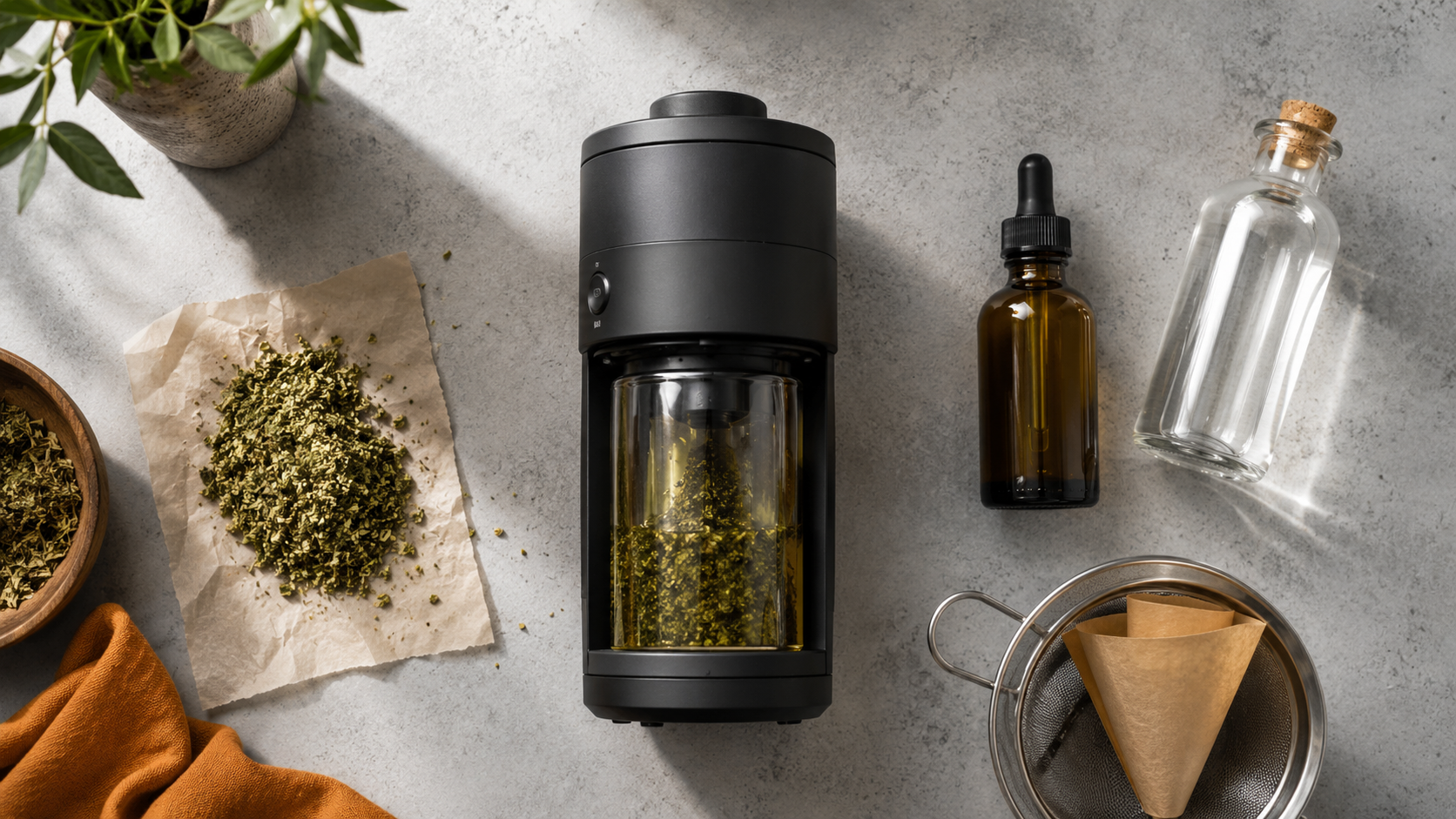
The NOIDS Herb Lab is an all-in-one kit: a 74 W countertop cooker with a 350 ml borosilicate glass and preset cycles for decarboxylation, oil infusion and ethanol work. Keep the oil or butter plus herb together below the glass MAX line at 250 ml and it handles the whole pipeline cleanly.
What you can make with it
One kit covers the whole pipeline, from activated flower to a dosed edible or tincture.
Dosing tools
The one thing worth being precise about is the dose.
Buy once, buy right
Buying guides
What to buy, in what order, and what each purchase actually fixes. Written to be useful whether or not you buy anything.
Continue exploring
Thermal Control, Mass Measurement, and Photolytic Storage Standards
Home preparation of cannabinoid infusions relies on three physical controls validated in analytical chemistry: closed-loop temperature regulation during decarboxylation (typically 105-120 °C to maximize neutral THCA/CBDA conversion while limiting thermal oxidation to CBN), gravimetric mass measurement on a 0.01 g resolution scale, and airtight amber borosilicate glass storage away from UV light and oxygen (Wang et al., 2016, Cannabis and Cannabinoid Research, PubMed PMID 27855989; Zamengo et al., 2019, Forensic Science International, PubMed PMID 30829376).
Frequently Asked Questions
What three pieces of equipment matter most for consistent home infusions?
An airtight UV-resistant glass jar for storage, a digital scale with 0.01 g resolution for weighing starting material, and a temperature-controlled decarboxylation and infusion vessel.
Why is a 0.01 g scale recommended over a standard 1 g kitchen scale?
Because dried cannabis flower typically contains 150 to 250 mg of total THC per gram, a 1 g kitchen scale rounding error can shift batch potency by up to 100 mg of THC.
How does airtight amber glass protect infused oils and dried flower?
Ultraviolet light and atmospheric oxygen accelerate the non-enzymatic oxidation of Delta-9-THC into cannabinol (CBN) and evaporate volatile monoterpenes.
 English